Feeding of Preterm & Low Birth Weight Babies
The Low-Birth-Weight delivery is 28% (UNICEF, 2014). Most of the preterm, low birth weight and intrauterine growth retarded babies continue to remain underweight and stunted and contribute to the prevalence of malnutrition. Therefore, the nutrition of these babies has to be given due importance.
Choice of Milk for Feeding
“BREASTMILK AND BREASTMILK” is the ideal feed for all newborns including low birth weight and premature babies.
Mother’s own expressed breast milk is the first and best choice. If mother’s milk is not available, the next best option is expressed donor milk from another lactating mother.
Method of Feeding According to Gestational Age
- 28–31 weeks: Sucking efforts are immature, therefore feeding is done through orogastric or nasogastric tube.
- 32–34 weeks: There is slight coordination of suck, swallow and breathing, so spoon, paladai or cup feeding can be given.
- After 34 weeks: Good coordination of sucking, swallowing and breathing develops, so breastfeeding can be initiated.
How to Express Breast Milk
Steps to express breast milk:
- The mother must wash her hands thoroughly using the 8 steps of handwashing.
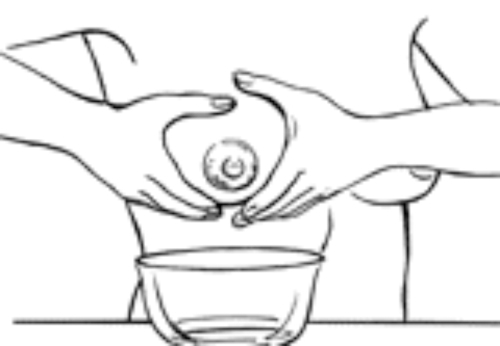
- Place a 30 ml measuring cup near the breast.
- Massage the breast for 5–10 minutes in a circular motion towards the nipple. This is similar to gently kneading dough using the fingers or knuckle of the fist. Non-nutritive sucking (NNS) may also help milk production and ejection.
- Press the breast with the thumb above the nipple and areola and the first finger below the areola opposite the thumb. Other fingers support the breast.
- Press behind the nipple on the lactiferous sinuses beneath the areola.
- Press similarly in all 360 degrees so that all segments of the breast are expressed.
- Empty one breast completely before expressing the other breast.
Storage of Expressed Breast Milk
Expressed breast milk can be stored as follows:
- At room temperature – up to 6 hours
- In refrigerator – up to 24 hours
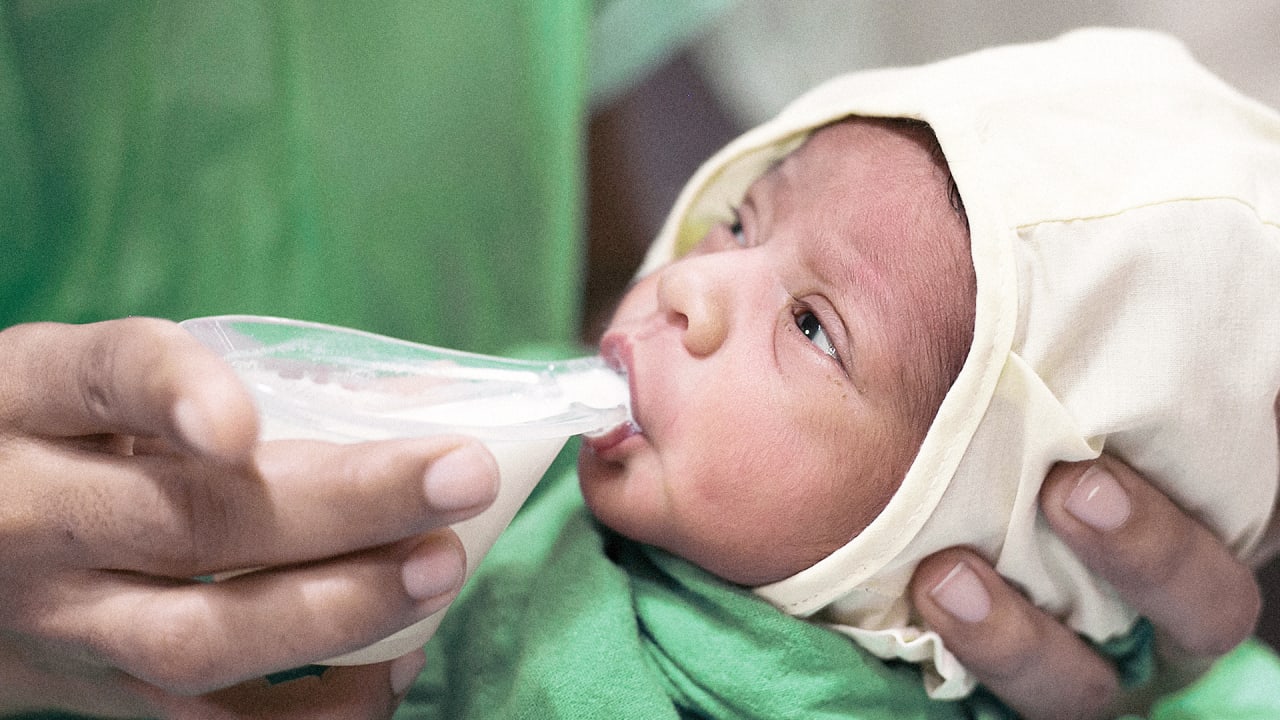
Steps of Cup / Spoon / Paladai Feeding
- Wash hands thoroughly using the 8 steps of handwashing.
- Keep the baby in head-elevated position on the mother’s lap.
- Place a cotton cloth around the neck to absorb spillage.
- Take the required amount of expressed milk in a measuring cup.
- Hold the cup by the handle and avoid touching the milk.
- Place the tip of the cup at the corner of the baby’s mouth and pour a small amount of milk.
- The baby should swallow the milk slowly and actively.
- If the baby does not swallow, stimulate gently on the foot or behind the ear.
- While measuring intake, deduct the milk left in the cup and the approximate spillage.
- Wash the cup with soap and water and sterilize it in boiling water for 20 minutes before the next feed.
Amount of Feed Required
At full feeding, the amount required is approximately 200 ml per kilogram of body weight per day. This provides sufficient calories and macronutrients required for low birth weight babies.
However, supplementation with vitamins, iron and calcium-phosphorus may also be required.
The total feed (200 ml/kg/day) should be given by cup, paladai or spoon every 2–3 hours, which means about 8–12 feeds per day.
Adequacy of feeding can be judged by:
- Urine frequency of 8–12 times in 24 hours
- Daily weight gain of 15–20 grams