Newborn Screening (NBS)
What is Newborn Screening?
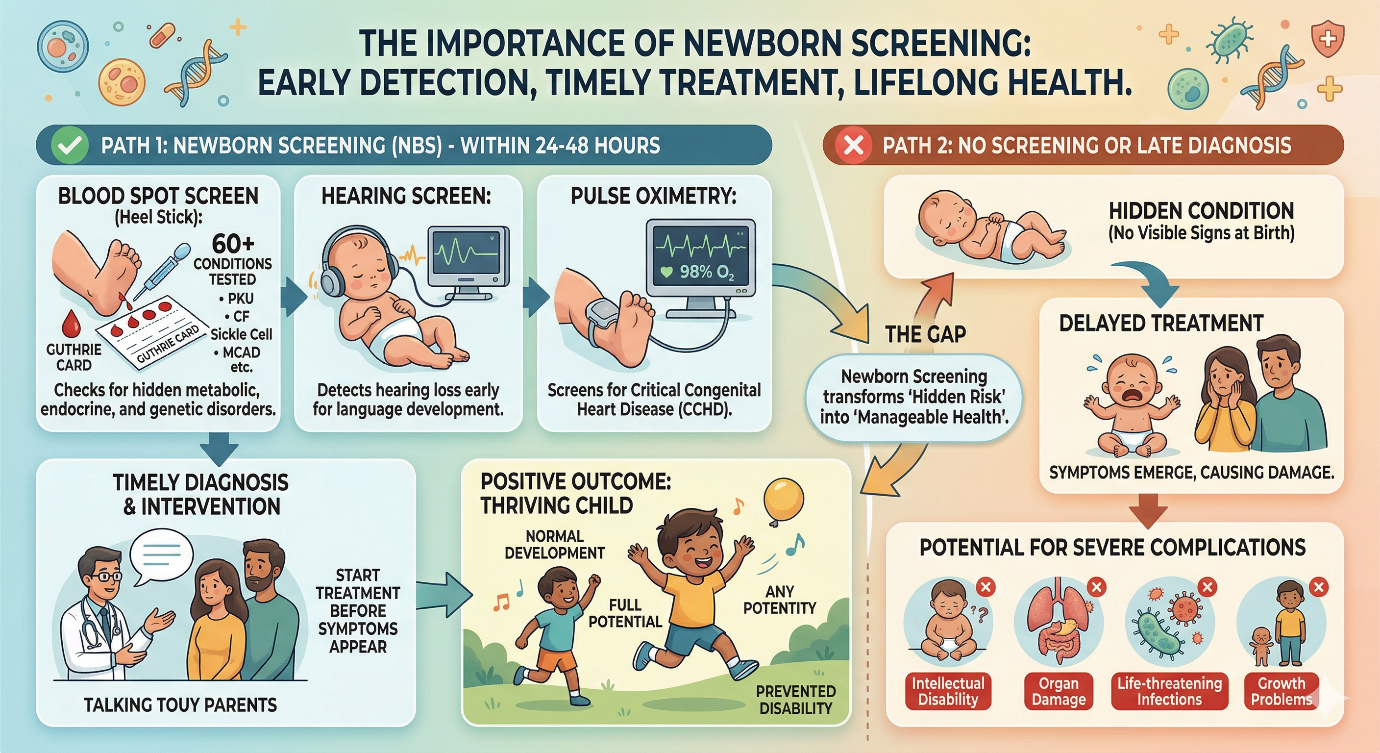
Many disorders in a newborn baby do not produce symptoms during early newborn period but may produce serious outcome when those babies are started on oral feeds. Newborn Screening (NBS) is the screening of the newborn between 3 – 7 days of birth for potential metabolic or genetic disorders so that treatment can be initiated as early as possible which will prevent or reduce the severity of long term harmful effects due to the disorders.
Diseases can be screened by using blood collected on filter paper through a heel prick.
Newborn screening is of proven public health value. In advanced countries, routine screening is done at birth to exclude up to 50 metabolic disorders.
There is a need for universal newborn screening in a phased manner for all newborns in India.
Types of Disorders to be Screened
Group A (All Newborns)
All newborns should be screened for:
- Congenital hypothyroidism
- Congenital adrenal hyperplasia
- G6PD deficiency
Group B (Screening in High-Risk Population)
Screening is recommended in high-risk newborns such as:
- Previous sibling with unexplained mental retardation
- Seizure disorder
- Previous unexplained sibling death suggestive of IEM
- Critically ill neonates
- Newborns/children with symptoms suggestive of IEM
- Consanguinity present in family
The following disorders may be screened:
- Phenylketonuria
- Homocystinuria
- Alkaptonuria
- Galactosemia
- Sickle cell anemia and other hemoglobinopathy
- Cystic fibrosis
- Biotinidase deficiency
- Maple syrup urine disease
- Medium-chain acyl-CoA dehydrogenase deficiency (MCAD)
- Tyrosinemia
- Fatty acid oxidation defects
Group C (Screening in Resource-Rich Settings)
Expanded newborn screening done by TMS for 30–40 IEM or GCMS for 110 IEM can be offered on a case-by-case basis where facilities for sending samples to TMS/GCMS laboratories are available.