Kangaroo Mother Care (KMC)
Of the 20 million low birth weight infants born globally every year, about 8 million are in India. Over 80% of neonatal deaths occur among small infants - 65% are attributable to preterm infants and 19% to term-small for gestational age (SGA) (Lawn Every Newborn Lancet Series 2014). India has the highest number of preterm births and also accounts for maximum number of neonatal deaths due to prematurity. Incidence of LBW (Low Birth Weight) in India is about 27% of total live births.
What is Kangaroo Mother Care (KMC)?
Kangaroo Mother Care (KMC) is a simple and effective method of caring for low birth weight babies. It involves early and prolonged skin-to-skin contact between the mother and the baby along with exclusive and frequent breastfeeding. KMC is a low-cost, evidence-based intervention that can prevent up to half of all deaths in babies weighing less than 2000 grams. The World Health Organization recommends KMC as a standard care practice for low birth weight infants.
What are the Components of KMC?
Kangaroo mother care has following components:
- Handwashing (PEDGEN) team strongly believes it as a component as 1/3 rd neonatal death is due to infection).
- Continuous skin-to-skin contact between mother and baby.
- Exclusive breast feeding.

Even Animals Understand the Need, Why Not Humans!!!
Kangaroo is an animal found in Australia. She invariably delivers a premature baby. The premature, baby kangaroo stays in the pouch of her mother, where it gets warmth and exclusive breast feeding till it is mature enough to survive outside.
Procedure of KMC
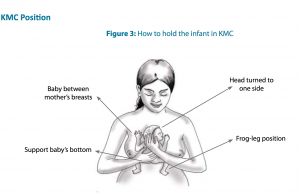
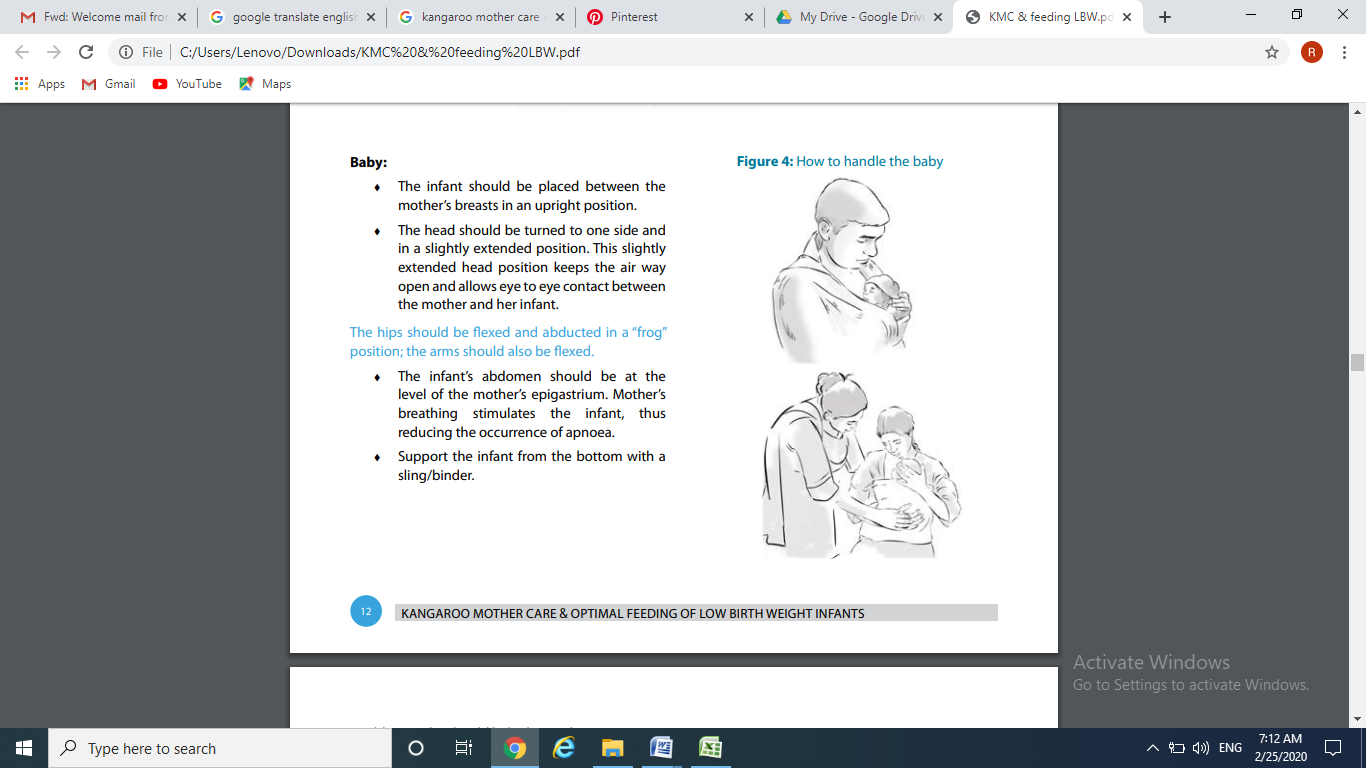
KMC should be started for babies weighing less than 2500 grams as early as possible after the baby is stabilized. The baby is placed in an upright skin-to-skin position between the mother’s breasts and covered securely to maintain warmth and comfort.
What is the Duration of KMC?
- Every KMC session should last at least 1 hour to prevent frequent handling of baby. The infants in KMC need to be removed only for changing diaper and clinical assessment.
- Breastfeeding can be continued in KMC position and is usually 2-3 hourly.
- Mother carriying an infant in KMC position can walk, stand, sit or engage in different activities if comfortable the mother can sleep with the infant in kangaroo position in a reclined or semi-recumbent position.
- Short: 4 hours daily
- Extended: 5–8 hours daily
- Long: 9–12 hours daily
- Continuous: More than 12 hours daily
What are the Benefits of KMC?
Advantages in the Neonatal Period.
- Decreased mortality
- Reduced hypothermia
- Improved physiological stability
- Reduced crying and apnea
- Lower hospital infections
- Better sleep and growth
- Improved breastfeeding
What are the Benefits of KMC?
Advantages of the Mother.
- Increased confidence and satisfaction
- Better bonding with baby
- Improved milk production
- Lower stress and postpartum depression
- Early hospital discharge
A Supportive Family Is Essential for Successful KMC.
- She should maintain hygiene including hand washing, daily bath, clipped
LBW Needs Dad Too!!
finger nails, tied up hair and clean clothes.
- Jewellery, watches and sacred threads must be removed as they may be a barrier to maintain hygiene and might cause injury to the newborn.
- Mother should preferably wear a culturally acceptable front open loose dress.
- Encourage the mother to keep the baby in KMC for as long as possible during day and night.
Preparation for KMC Provider
- The provider should be healthy and willing.
- Maintain hygiene including hand washing and clean clothes.
- Remove jewellery and watches.
- Keep nails trimmed and hair tied.
- Wear a comfortable front-open loose dress.
How to Provide KMC
- Dress the baby with diaper, cap and socks.
- Place the baby between the mother’s breasts in skin-to-skin contact.
- Keep the baby upright to prevent aspiration.
- Turn the baby’s head slightly to one side.
- Keep hips in frog position and arms flexed.
Don'ts of KMC
- Do not bathe the baby until weight reaches 2500 grams.
- Avoid frequent handling.
- Do not give bottle feeding.
- Avoid contact with sick people.
When should KMC be discontinued?
Often an infant is taken off kangaroo mother care when gestation reaches term or the weight is around 2,500 grams. By this time the infant starts wriggling to show that he or she is uncomfortable, pulls out the limbs from the kangaroo garment and cries and fusses every time the mother tries to put the infant back in skin-to-skin contact. This is the time to wean the infant from KMC.
What Should be the Preparation for the KMC Provider?
Family members such as father, grandfather, or aunt can provide KMC, the best KMC provider is the mother.
- The KMC provider must be willing, in good health, free from serious illness.