What are the Difficulties in Breastfeeding?
The pregnant mother should be encouraged for breastfeeding. Any breast related issues like inverted nipple have to addressed in the last trimester of pregnancy. Antenatal counselling individually or in groups organised by maternity facility should deliver messages of breastfeeding and harm of formula feeding/Top feeding. The main aim is to prime the would-be mother for successful breastfeeding. Some of the difficulties in breastfeeding are:
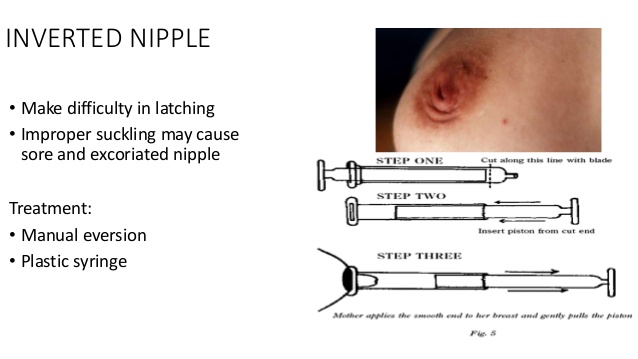
1. Inverted Nipple
The nipple doesn’t protract. Expecting mother with inverted nipple may be helped with the syringe method:
- Cut the nozzle end of a disposable syringe (10-20 ml).
- Insert the piston through the cut end side.
- Apply the smooth end of the syringe over the nipple and gently pull the piston; wait for a minute.
- The nipple will protrude into the syringe. Slowly release the suction to help the nipple erect.
- Repeat daily over a few days to solve the problem.
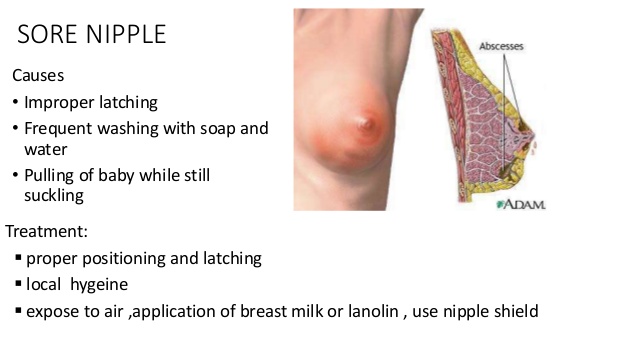
2. Sore / Cracked Nipple
Frequent washing with soap should be avoided. Improper attachment or bottle feeding can cause soreness. Candida infection may also be a cause.
Treatment: Avoid bottle feeding, limit washing, proper positioning, apply hind milk or emollient cream, and allow nipple to air between feeds.
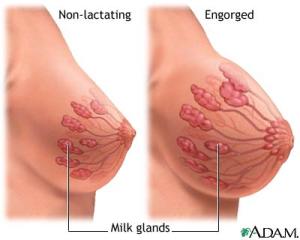
3. Engorgement of Breast
After 2-3 days of delivery, milk production increases. Delayed or infrequent feeding leads to swollen, hard, warm, and painful breasts.
Treatment: Early and frequent breastfeeding, manual expression, warm water packs, analgesics if needed.
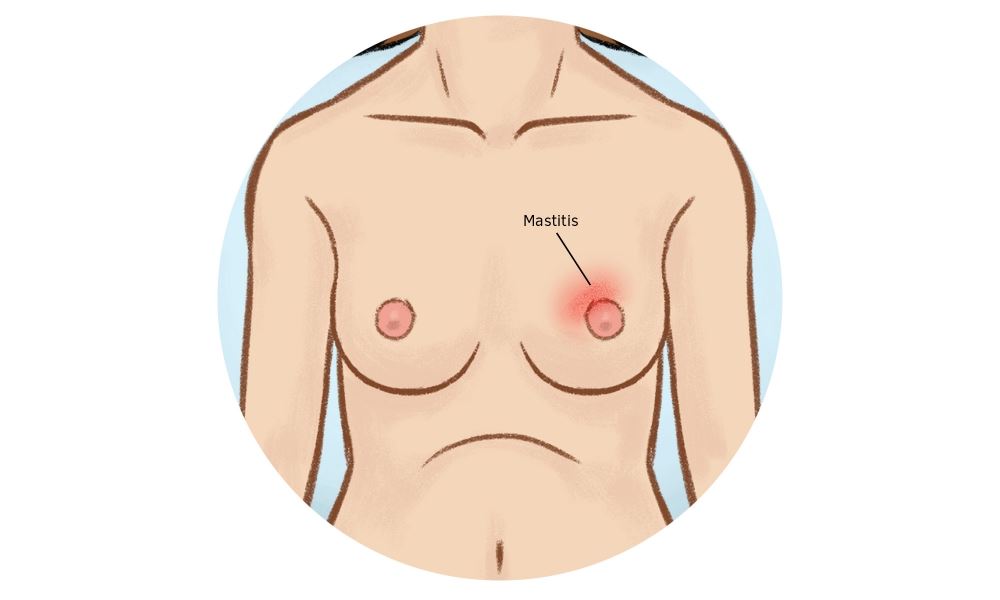
4. Breast Abscess
Delayed treatment of engorgement or cracked nipple can lead to infection and abscess. Swelling, redness, tenderness, and fever may occur.
Treatment: Manual milk expression, painkillers, antibiotics, sometimes incision & drainage. Breastfeeding must continue.